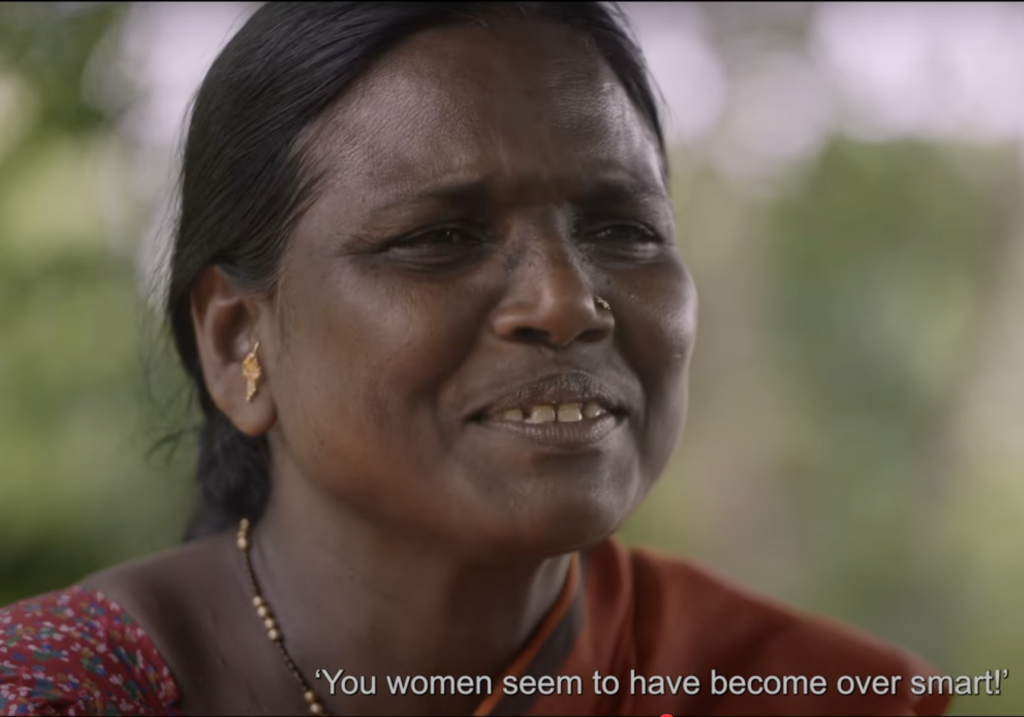
"You Women Seem to have Become Over-Smart!"
On International Women's Day, we salute women who have overcome severe odds, ignored snide remarks and forged a path towards liberation with dignity and joy.On International Women’s Day, we salute women who have overcome severe odds, ignored snide remarks and forged a path towards liberation with dignity and joy. A shining light in their communities their stories inspire us and connect us with women in villages and towns in India. We invite you to meet three such trail blazers, Dwaraka Waghmare from Beed district, Maharashtra, V. Amsaveni from Tiruvannamalai district, Tamil Nadu, and Lalita from Lucknow, Uttar Pradesh.
International Women’s Day
Stories of Power
“My parents had to endure a lot of hardship,” begins Dwaraka Waghmare. Her mother swept floors in others’ homes. “We were given the grain which was collected from sweeping. My mother would wash it and leave it to dry. After it dried she would get it ground. My mother would separate the best from what we collected. She would eat the stale ones and give us the fresh ones.”
 |
Today Dwaraka tai is one of several hundred women farmers in Beed and Hingoli districts changing the face of agriculture, and with it the levers of power in society. Four tell their stories in “One Seed at a Time,” a film released today by the Society for Promoting Participative Ecosystems Management (SOPPECOM). It is an honor for AID to support thier work in agro ecology and share in the exciting journey they are leading.
20 years ago, defying the rigid gender roles expected of women in her remote village, a young mother of two named Amsaveni decided to take a job. She needed it to make ends meet and wanted her children to have a better future. The job she took: field coordinator for AID India’s Tamil reading program in Tiruvannamalai district. Visiting five schools daily she managed the program in 35 schools. While hanlding this and caring for her children with the help of her mother, she was able to earn a living, but along the way faced resentment and physical assault from her husband. Amsaveni shared, “This frightened my daughter deeply. To ensure her safety I sent her to my parents’ village, hoping she could study in peace.” Meanwhile in AID India, she became a block-level trainer in the education project and eventually took charge of ten different projects in the district, which is home to several Eureka Focus Villages.
|
In Erpakkam, Amsaveni worked with the local community, whose tribe is not recognized in government records, to obtain plots of land and move into their own homes from the makeshift huts on low-lying land which flooded whenever heavy rains fell. Amsaveni changed not only her own life but over 20 years working with AID India has helped hundreds if not thousands of people to change their lives as well. Today her son has a good job and her daughter is studying in college. |

|
Leaving an abusive marriage was the first of a series of bold decisions Lalita made to claim the life she wanted for herself. In 2015, she became the first woman to drive an e-rickshaw in Uttar Pradesh, and has been earning her living and raising her two children ever since. With her at every step of this journey has been Hamsafar, an organiation that supports women in crisis. With their guidance she learned how to drive, speak English and handle accounts, and also took self-defense training. That training has served her well on several ocassions, as she describes. “Four men came to my rickshaw and knocked out the light. I grabbed one of them by the collar. The police came and I pointed out that these men have knocked out my light. I was not scared.” Today, when she is not driving in Lucknow, she makes time to understand the various kinds of oppression people around the country face, build solidarity, and encourage others through her example. AID is proud to support women like Lalita rebuilding their lives and making brighter futures attainable for women in Uttar Pradesh and across India. |

“You women seem to have become over smart!”
Bonus! Our fourth story takes us back to Beed district and the film “One Seed at a Time” in which Sanjivani Salve shares her experiences practicing farming after learning agro ecological techniques which involve intercropping many varieties in one plot. When she tried to hire a bull and plow at sowing time, she had a hard time making the ox-driver understand how she wanted her seeds sown.
Finding it too complicated to deal with small portions of many kinds of seeds, he retorted, “Where have you learned all this from? You women seem to have become over smart! We’ve been farming for so many decades and we haven’t seen this… Why should I deal with all this?”
How did the women persist? To find out, watch “One Seed at a Time.”
Friends, our solidarity makes the path to empowerment accessible for more women across India.