One Seed at a Time: Women Farmers Revolutionize Agriculture
"One Seed at a Time" shows how women farmers challenge societies' rigid structures and bring equity to their lives.
Women Revolutionize Agriculture One Seed at a Time
A silent revolution is unfolding in the agriculturally distressed regions of Maharashtra, India. On International Women’s Day, the Society for Promoting Participative Ecosystem Management (SOPPECOM) has released a short film featuring women at the forefront of this revolution.
Through the film, women are saying that if we practice agroecology-based farming, we will get diverse food, save on cultivation costs, have healthier soil, and importantly women will be valued and recognised for their diverse knowledge systems. This will help counter the damage done by conventional mono-cropping farming and challenge the oppressive structures of caste, patriarchy, and other forms of discrimination.
In the film, women who have been affected by agrarian distress including farm suicide in the family, share their experiences enduring devastation from conventional capital- and chemical-intensive agricultural practices. They question the underlying causes and rigid social heirarchies such as caste and gender.
These brave women tell their own story of how they challenge these structures, claim their power, and transform the future not only of their farm, but of society.
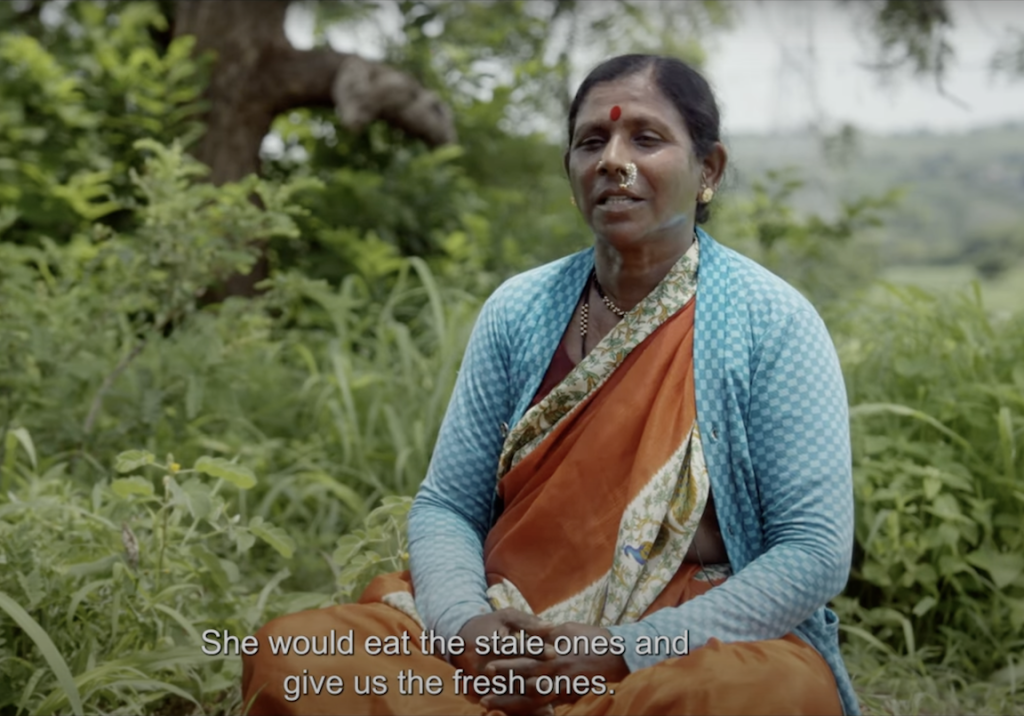
“My parents had to endure a lot of hardship,” begins Dwaraka Waghmare. Her mother swept floors in others’ homes. “We were given the grain which was collected from sweeping. My mother would wash it and leave it to dry. After it dried she would get it ground. My mother would separate the best from what we collected. She would eat the stale ones and give us the fresh ones.”
Today Dwaraka tai is one of several hundred women farmers in Beed and Hingoli districts changing the face of agriculture, and with it the levers of power in society. Four tell their stories in “One Seed at a Time,” a film released today by the Society for Promoting Participative Ecosystems Management (SOPPECOM). It is an honor for AID to support their work in agro ecology and share in the exciting journey they are leading.
In the words of the Mahila Kisan Adhikar Manch: A silent revolution is unfolding in the agriculturally distressed regions of Maharashtra, India. Through new farming practices, marginalised women farmers are challenging societies’ rigid structures and bringing equity to their lives.
AID is proud to support these women and excited to announce that their experiment in agro-ecological farming has inspired more women to pursue this in Beed and Hingoli districts. Having an alternative, self-reliant source of livelihood not only improves their own food security, health and income, but reduces their need to migrate for work and strengthens their ability to demand fair wages and working conditions when they do.
Sanjivani Salve practices agro ecological farming in Beed District. She describes her experience and challenges she faced in the film "One Seed at a Time."